

March 21, 2026 —
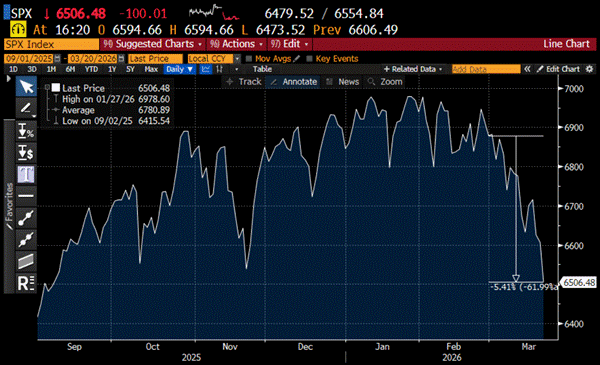
With apologies if this is the tenth investment piece you’ve read this week about the impact of the Iran War on asset markets, but we wanted to share our thoughts on what’s going on with our investors. First a recap. The S&P 500 is down 5.4% since the February 28, 2026 start of the Iran War.
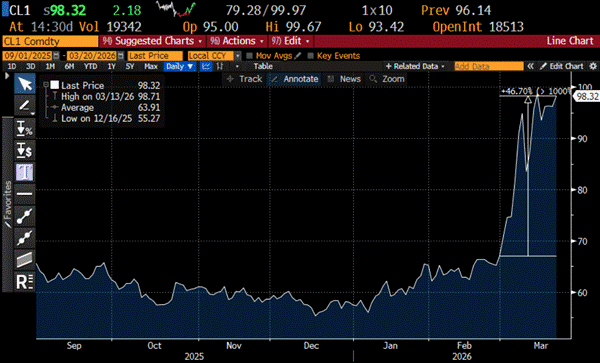
The catalyst has been Iran’s de-facto closing of the Strait of Hormuz. West Texas Intermediate (WTI) oil futures are up almost 50%. Brent futures, the international benchmark, are even higher.
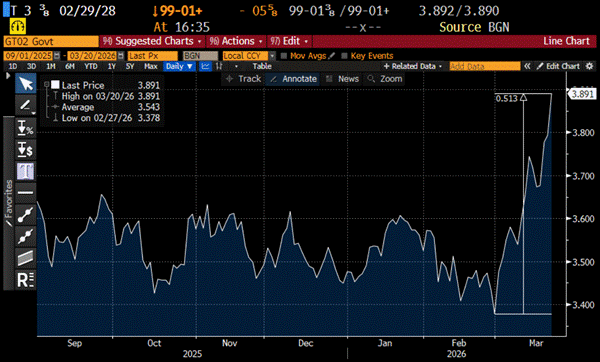
This has led to concerns about inflation, as energy prices work their way through the supply chain. The Fed, and other central banks, which had been expected to cut rates later in 2026 are now looking at a trickier path to ease monetary policy due to their price stability mandates. Interest rates, short- and long-term, are up significantly. Two-year rates are up over 50 basis points.
It all adds up to a pretty somber market at the moment.
Our view is that preparing for such market dislocations should take place in the months and years leading up to these—largely unforecastable—events. Before we invest a penny for our clients, we walk them through the potential downside scenarios of stock investing. We make sure that clients’ investment portfolios are consistent with their risk tolerance and liquidity needs. The goal is when market events like this take place, clients who have risk- and liquidity-appropriate portfolios will choose to simply do nothing.
Historical Performance of Different Risk Level S&P 500 / Treasury Portfolios
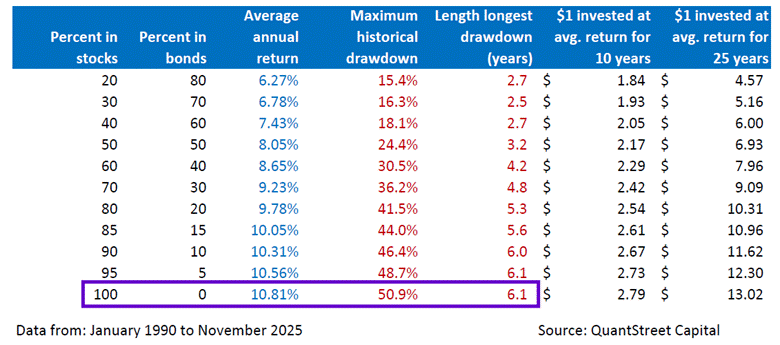
As the above table shows, an all-stock portfolio returned, on average, 10.8% per year since 1990, but that same portfolio has also experienced severe drawdowns, with the worst peak-to-trough loss being 50.9%, with a longest recovery time of 6.1 years (i.e., the time it took for the market to hit its next peak after the prior one following a severe drawdown). In the context of this downside risk, the 5.4% market drawdown thus far does not seem either historically anomalous or particularly problematic. For those whose plan was to stay the course, nothing seen so far should change that plan.
Keep in mind that the historical numbers in the above table are just that, historical performance numbers of portfolios that are different static blends of the S&P 500 and Treasuries. These are not forward-looking estimates of either returns or drawdowns. Future returns might be lower than the 10.8% per year reported in the table, and future drawdowns might be more severe than 50.9%.
Staying the course
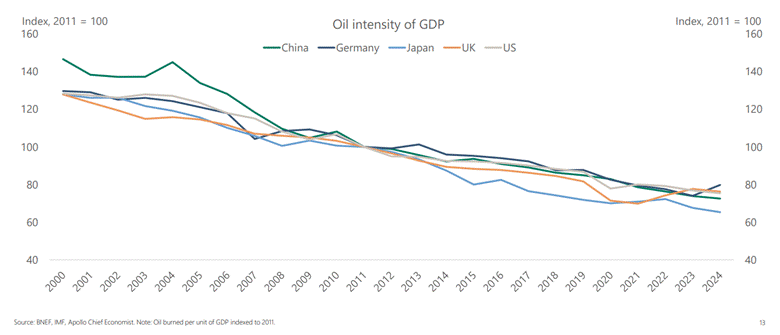
Does staying the course make sense from an investing point of view? We think so. First, the US and other developed economies have become considerably less oil dependent than they were in the past. This chart from Torsten Slok of Apollo shows the amount of oil burned per unit of GDP, indexed to 100 in 2011.
The following chart from the US Energy Information Administration shows that the US has become a net exporter of petroleum over the last several decades.
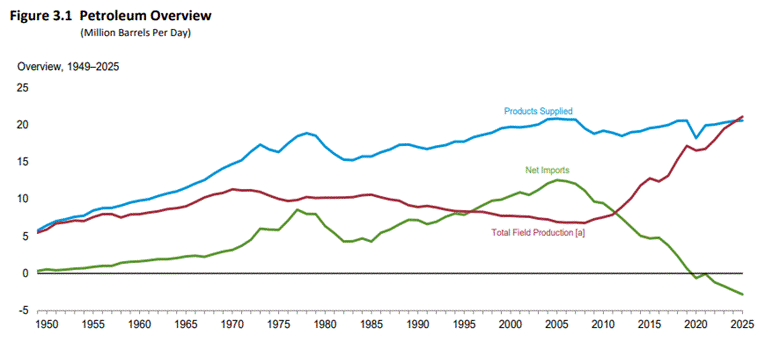
By virtue of these developments, the US and our global allies are not as dependent on Middle East oil as we were in the 1970s. Prognostications that we are entering another decade like the 1970s seem off-base, even if they come from highly credible sources (see, also, Paul Krugman’s work on this topic).
In addition to the very different oil dynamics faced by the US and our allies—both on the demand and supply side—let’s keep in mind how focused the Trump administration is on unblocking the Strait of Hormuz. Whatever one thinks of President Trump, no one can question his determination, and he is very determined to get oil prices back down. First, from a military perspective, the US has achieved many, though clearly not all, of its objectives. Second, the US is devoting sizable resources to open up the Strait to commercial traffic. It is hard to see how long Iran can sustain its disruption tactics.
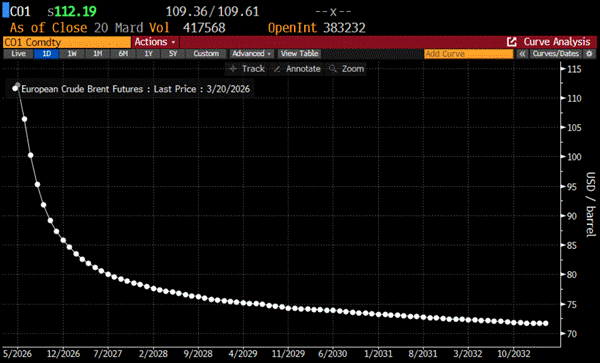
Looking at the Brent futures curve, which shows the price for a barrel of oil delivered in future months, the market believes the present elevated oil prices will not last for more than a few months, though certainly even a few months will cause some economic pain.
Finally, the next chart from Wells Fargo shows that what’s happened so far is exactly in line with prior Middle East conflicts. During the first and second Gulf Wars, oil prices spiked, the S&P 500 sold off, but both moves were quickly reversed.
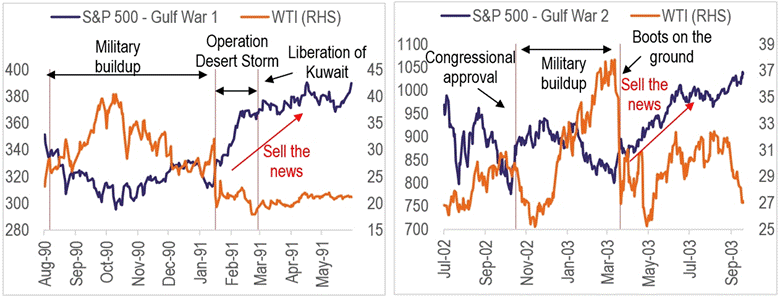
As we wrote recently on our Substack analysis of the present energy spike, there are reasons to be hopeful that history will at least rhyme this time around.
Working with QuantStreet
QuantStreet is a registered investment advisor. We offer wealth planning and investment services for individuals. We offer model portfolios and platform services for other advisors. To work with or learn more about QuantStreet, join our mailing list or contact us at hello@quantstreetcapital.com. Registration does not imply a certain level of skill or training.